

What is Retort Pouch?
Retort pouches are used for ready meals, wet pet food, cooked seafood, sauces, and other products that need a long ambient shelf life without refrigeration. The filled and sealed pouch goes through an autoclave at 121°C or higher to kill bacteria. After sterilization, the product stays shelf-stable for 12 to 36 months.
Retort pouch has to survive that autoclave cycle with its seal and structure intact. That requires CPP as the inner sealant layer — it holds seal strength above 100°C, which standard sealant films like LLDPE and PE do not — and an adhesive system formulated for sustained autoclave heat and pressure. Those two things are what separate a retort pouch from a regular food bag.
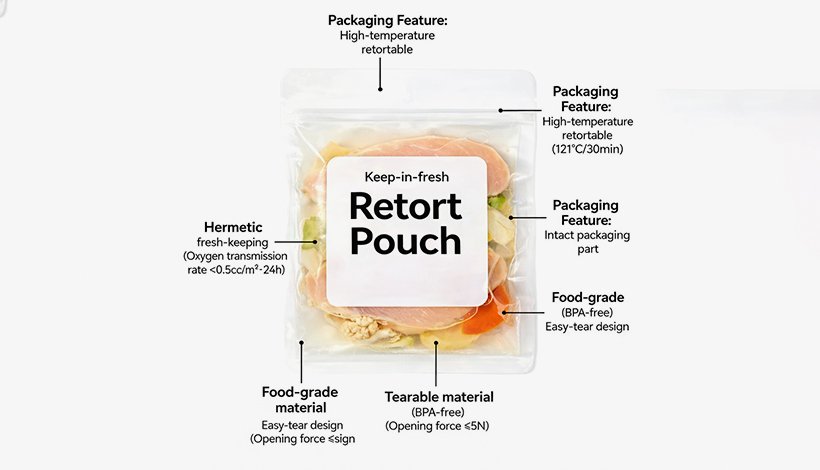
One-Stop Retort Pouch Manufacturer in China
EHAI Packaging has been making flexible packaging in Dalian, China since 2002. As a custom retort pouch manufactuer, our factory in Zhuanghe handles printing, lamination, slitting, and finished pouch production. Retort lamination uses a two-component polyurethane adhesive system selected for autoclave conditions — a different adhesive category from what we use for ambient or frozen packaging structures.
We work with food manufacturers, pet food brands, seafood processors, and sauce producers who need retort packaging with consistent film quality across production runs. Samples are available before any order. Send us your sterilization temperature, shelf life target, and product type and we’ll recommend the right structure.
Retort Pouch by Application
Our retort pouches are used across ready meals, pet food, seafood, sauces, baby food, and outdoor rations. Below is how we approach each category.
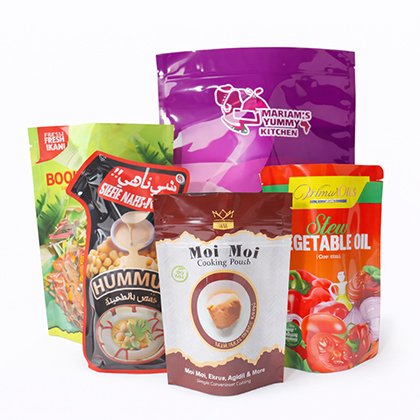 Ready Meal Retort Packaging
Pre-cooked meals, rice dishes, curries, stews. Flat or stand-up format retort pouch depending on display vs. carton packing. PET/AL/CPP for most applications with 12 to 18-month shelf life targets. PET/NY/AL/CPP for products with chunky meat or bone-in pieces. Standard sterilization is 121°C — higher processing temperatures need to be confirmed before we specify the CPP grade.
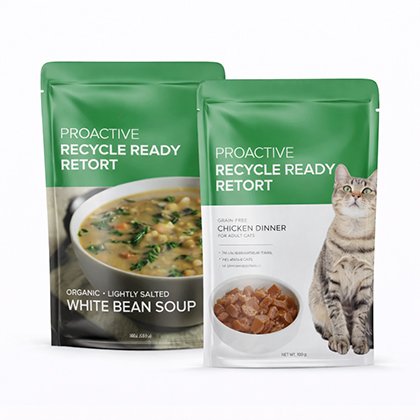 Pet Food Retort Packaging
Wet cat food, dog food, fish-based varieties. Shelf life targets of 24 to 36 months are common, so foil barrier is generally required. PET/AL/CPP or PET/NY/AL/CPP depending on product texture. We supply manufacturers going into Japan, Korea, and EU markets where incoming packaging is inspected for barrier performance and structural consistency.
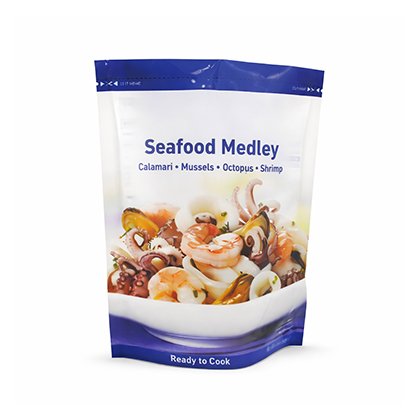 Seafood Retort Packaging
Cooked shrimp, fish fillet, squid, crab meat, shellfish. PET/NY/AL/CPP is the standard spec for most seafood retort pouch applications because the nylon layer handles puncture risk from shells and bones through the entire autoclave cycle. Dalian’s seafood processing industry is our immediate market, so this is a product we know well.
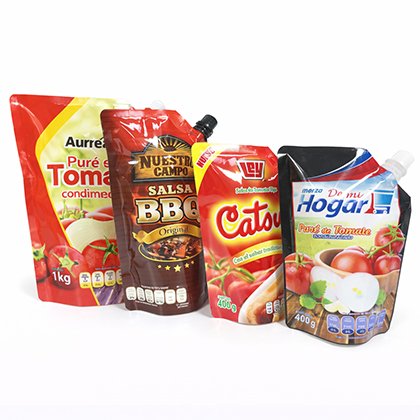 Sauce and Condiment Retort Packaging
Pasta sauces, curry pastes, marinades, liquid condiments. Smooth product, no puncture risk — PET/AL/CPP is sufficient. Stand-up retort pouch for retail, flat pouch for food service. Spout fitment available for squeeze-and-pour formats.
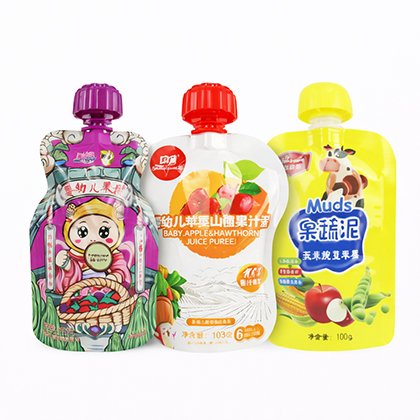 Baby Food Retort Pouch Packaging
Pureed vegetables, fruit compotes, mixed baby meals. Material compliance requirements are stricter than standard food retort pouch packaging — FDA and EU food contact regulations both apply. PET/AL/CPP is typical for 12 to 18-month shelf life. Transparent retort is used when product appearance is a factor in the purchase decision.
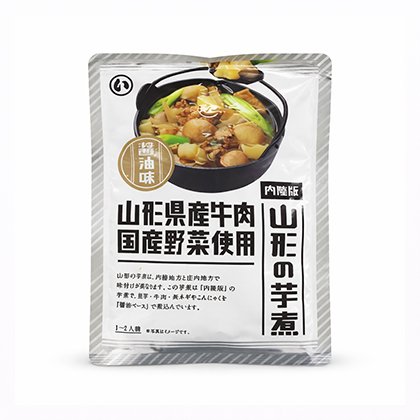 Outdoor and Military Ration Retort Pouch Packaging
Sterilization at 130°C to 135°C is common for this category, which means CPP grade and adhesive system need to be adjusted from standard retort specs. Shelf life is typically 36 months or above. This is not a standard ready-meal retort structure — the parameters need to be discussed separately.
Custom Retort Pouch Options
We can adjust retort pouch structure, format, size, and print to match your sterilization process and product requirements. Send us your autoclave temperature, shelf life target, and product type, and we’ll work through the right combination.

Available in PET/AL/CPP, PET/NY/AL/CPP, NY/AL/CPP, PET/CPP, and NY/CPP. Adhesive grade and CPP type are selected based on your autoclave parameters, not a standard default.

Flat three-side seal, stand-up doypack, spouted pouch, shaped/contoured pouch. Format depends on your filling line, retail display, and how the end consumer opens the product.

Width, length, and gusset depth to your specification. Retort pouches expand slightly in the autoclave — we account for this in the dimensional spec.

Up to 9-color rotogravure for food photography and brand graphics, or flexo for shorter runs. Printing before lamination. Post-retort color shift on certain pigments is checked during artwork review.

Matte and gloss available. Soft-touch on request. Matte is common in premium food and pet food retort; gloss for mass-market ready meals and sauces.

Total laminate thickness adjusted for product weight, handling requirements, and sterilization temperature. Higher autoclave temperatures and heavier fill weights generally call for heavier CPP sealant layers.

Tear notch is standard. Spout fitment for squeeze packs and liquid baby food. Euro hole and hang hole for peg display. Rounded corners to reduce stress concentration at corner seals during sterilization. Note: zipper closures are not compatible with retort sterilization temperatures.

Standard retort pouch structures are rated for 121°C. For 130°C to 135°C applications, CPP grade and adhesive system both need to be adjusted. Please share your full sterilization parameters so we can confirm whether the standard spec applies or needs modification.
Retort Pouch Formats
Flat three-side seal is the most common format, used for both shelf display and carton packing. Stand-up retort pouches work well for retail shelf presence. Spouted pouches are used for sauces, baby food, and squeeze-format products. Shaped or contoured pouches appear in premium segments.
Which format fits depends on your filling equipment, how the product is displayed, and how the consumer opens and uses it.
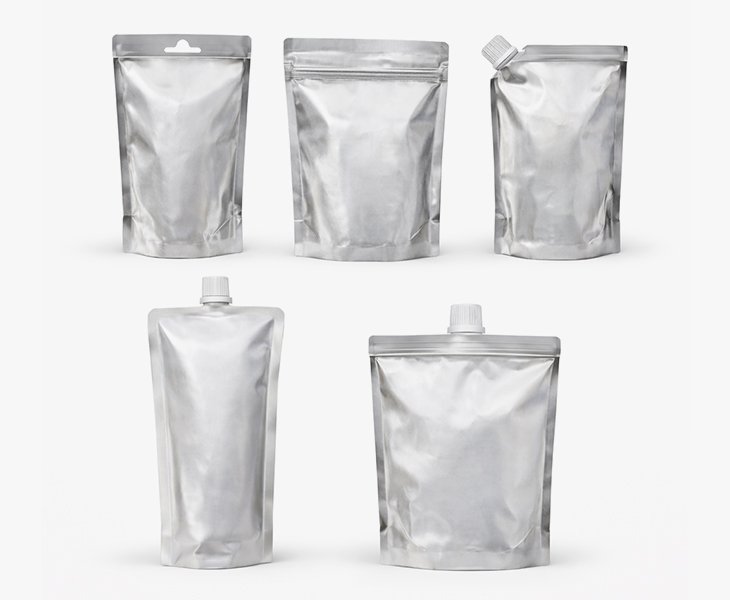
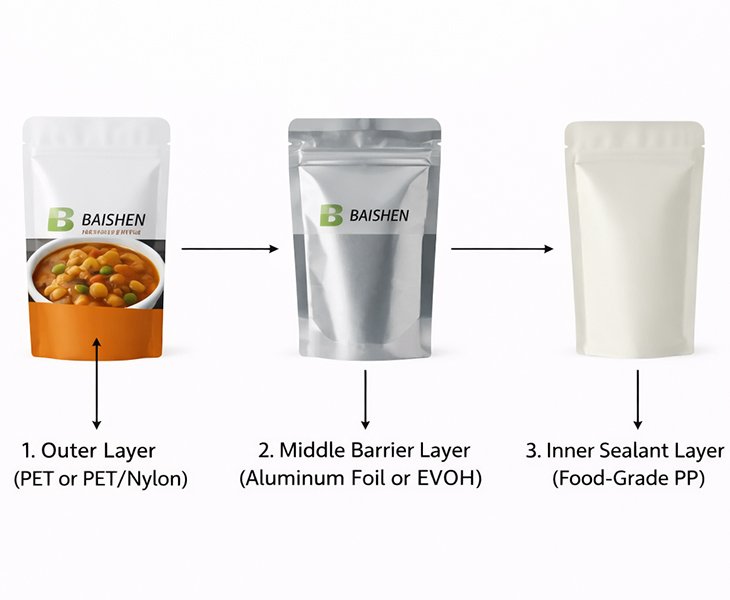
Retort Pouch Material Structures
Retort pouches are typically made with a three-layer structure. The outer layer, such as PET or PET/Nylon, provides strength and printability. The middle layer, usually aluminum foil or EVOH, acts as the barrier against oxygen, moisture, and light. The inner layer is food-grade PP, which allows direct food contact and secure heat sealing.
Why Choose Our Retort Pouches?
Retort pouch performance depends on getting the material structure, adhesive system, and CPP grade right before production. Most failures show up during sterilization, not on the filling line. Below is how we approach each of the main technical requirements.
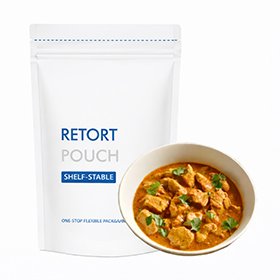
The inner sealant layer in all our retort pouches is CPP. We select CPP grade based on your sterilization temperature — standard retort at 121°C and high-temperature retort at 130°C to 135°C require different grades. We confirm your autoclave parameters before specifying anything.
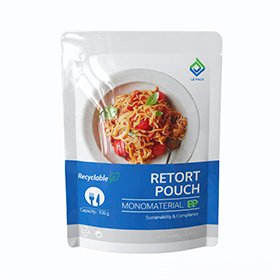
For retort applications, the adhesive system needs to be selected specifically for autoclave conditions. Standard dry-lamination adhesives are rated to around 80°C to 100°C. Our retort pouch structures use two-component polyurethane adhesive formulated for sustained autoclave heat and pressure, which maintains bond strength through sterilization and the pressure differential during cooling.
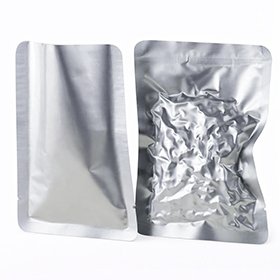
Foil-based structures (PET/AL/CPP or PET/NY/AL/CPP) are the right choice for shelf life targets of 18 months and above, high-fat product, or export to markets with strict barrier requirements. Transparent retort pouches are a suitable option when product visibility is important and the required shelf life is relatively short, typically up to 12 months. We can recommend the suitable structure based on your product and distribution requirements.
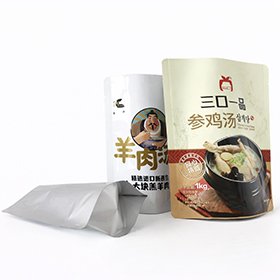
Smooth liquid and paste products run fine on PET/AL/CPP. For chunky stews, bone-in seafood, whole fish, and large-format pet food, PET/NY/AL/CPP is the more appropriate structure. The nylon layer provides puncture resistance through the autoclave cycle, where product expansion puts pressure on the film from inside. This is one of the more common structure questions we get from seafood processors in Dalian.
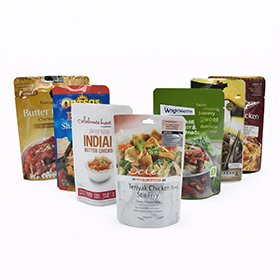
Printing is applied before lamination so ink is protected by the film rather than exposed on the outer surface. Up to 9-color rotogravure for detailed food graphics; flexo for shorter runs. Some pigments shift in color after high-temperature sterilization — we check for this during artwork review and flag any concerns before production.
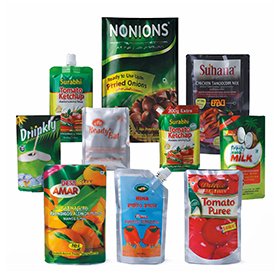
Not every retort application needs the most complex or most expensive structure. A domestic shelf sauce with a 12-month shelf life runs well on PET/AL/CPP. A 36-month export pet food product has different requirements. We recommend based on what the product and distribution channel actually need.
A regular food bag is not built for autoclave sterilization. Standard sealant films like LLDPE soften above 90°C and lose seal strength; standard adhesives delaminate under autoclave pressure. Retort pouches use CPP as the sealant layer and retort-grade adhesives, which allows the pouch to go through sterilization at 121°C or higher without failing.
PET/AL/CPP is sufficient for smooth liquid and paste products with no sharp geometry. PET/NY/AL/CPP is recommended for chunky products with bone, shell, or irregular hard pieces, where mechanical pressure on the film during sterilization is a concern. We can recommend the appropriate structure based on your product details.
121°C is standard for most commercial food sterilization. For 130°C to 135°C applications, both the CPP grade and adhesive system need to be adjusted. Please share your sterilization parameters before we confirm the structure.
Transparent retort (PET/CPP or NY/CPP) is used when product visibility matters at the point of sale and shelf life is around 12 months or shorter. Without foil, barrier performance is lower and shelf life is usually shorter. For 18-month targets and above, foil-based structures are more appropriate.
Yes. Wet pet food with 24 to 36-month shelf life targets is one of the larger applications for retort pouches. Foil-based structure is generally required. CPP grade and film gauge are selected based on your sterilization process and shelf life target.
Yes. All formats support custom printing — up to 9-color rotogravure or flexo for shorter runs. Printing is applied before lamination. Certain pigments can shift in color after high-temperature sterilization; we review artwork for this before production.
A vacuum bag is for refrigerated or frozen preservation — it removes air before sealing but is not built for high-temperature sterilization. A retort pouch goes through an autoclave to produce a shelf-stable product. The sealant layer, adhesive system, and overall structure are different and the two are not interchangeable.
MOQ is quoted based on structure, bag size, and print. Retort pouches have more material layers than standard flexible packaging, which affects per-unit cost. Send us your dimensions, structure, sterilization temperature, and approximate monthly volume for a direct quote.
Related Products
 Liquid Pouches
 Gift Bags
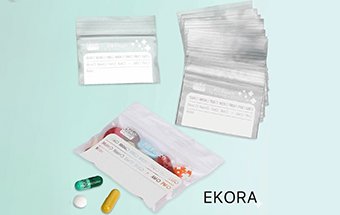 Medical Packaging Bags
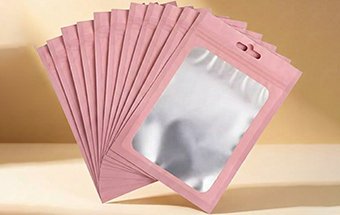 Cosmetic Packaging Bags
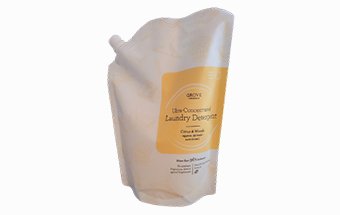 Detergent Pouch
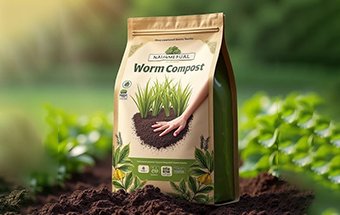 Agricultural Bags
 Electronic Packaging Bag
 Eco-Friendly Packaging Bags
 Packaging Film