

What Surface Finish Means in Flexible Packaging
The finish sits on the outermost layer of the laminate. It determines surface sheen, affects how printed colours appear, and influences how the bag handles scuffing and abrasion during transit and retail handling.
It’s also connected to the rest of the packaging structure in ways that aren’t always obvious. The same matte lamination can look different on a PET-based structure versus a kraft laminate. Finish interacts with the ink layer beneath it — which is part of why unfinished film proofs don’t always reflect what the final bag looks like. In sampling this matters somewhat. Across high-volume repeat production, it matters more, because small visual differences multiply.
This is worth knowing before finalising a finish decision, particularly if colour consistency across batches is important.
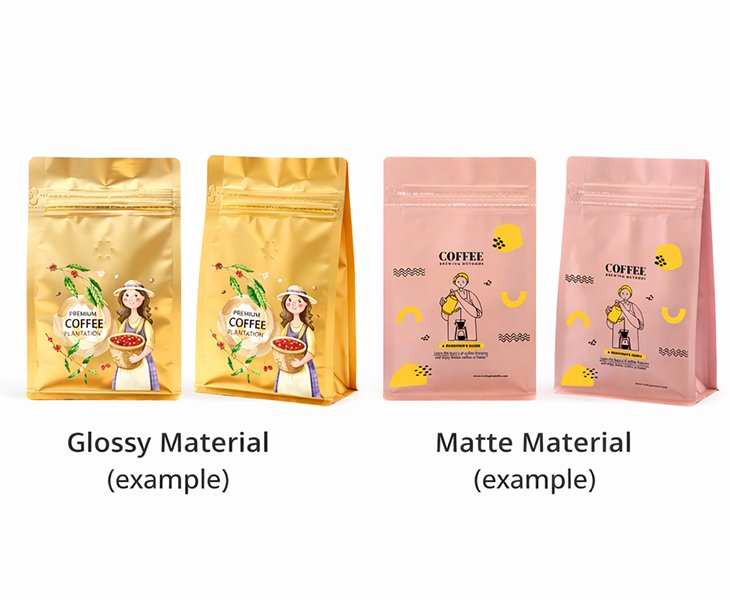
How Surface Finish Changes Packaging Appearance
Gloss makes colours look more saturated and holds visual contrast well under varying retail lighting. It’s predictable — what you see in a proof is close to what you get in production.
Matte shifts the impression. The same design under matte will look quieter, with less visual intensity. For some product categories that reads well. For others, particularly in bright retail environments or for products with strong colour in the design, it can flatten the look in a way that doesn’t serve the packaging.
Finish also behaves differently depending on the printing method. Gravure-printed designs with fine detail tend to hold well under both gloss and matte. For complex designs going to matte via flexo, it’s worth checking colour accuracy before committing to mass production — the matte lamination can shift how certain colours read, and this is easier to catch in sampling than to correct afterward.
Practical Considerations Before Finalising a Finish
Finish should be confirmed before artwork goes to plate. It affects how printed colours appear on the final bag, and adjusting after files are in production creates delays.
Physical samples communicate finish intent more clearly than screen descriptions. If you have a reference bag — from a competitor, a previous supplier, or a product you want to match — send it. It removes a lot of ambiguity at the specification stage.
For repeat orders, consistency across runs matters. Gloss and standard matte are reliable run-to-run. More specialised treatments can have more variation. If finish consistency is important across multiple batches, this is worth confirming when the specification is set.
One practical note on proofing: finish can shift slightly between a pre-production sample and full production, particularly with matte and soft-touch. This is normal, but it’s useful to know when reviewing initial samples so expectations are set correctly before mass production begins.
Matching Finish with Product Category and Market
Gloss works for most standard food packaging. It doesn’t need to be upgraded without a clear reason.
Matte makes commercial sense in premium or speciality segments — coffee, organic food, health products, premium pet food. In these categories, the finish carries some meaning for buyers and end consumers. In commodity categories, it typically doesn’t, and the cost premium reflects that.
Soft-touch is selective. We’d only suggest it when the tactile element genuinely fits the product positioning, and when distribution conditions are relatively controlled. Long transit, rough handling environments, and bulk retail formats are all situations where soft-touch tends to underperform relative to the cost.
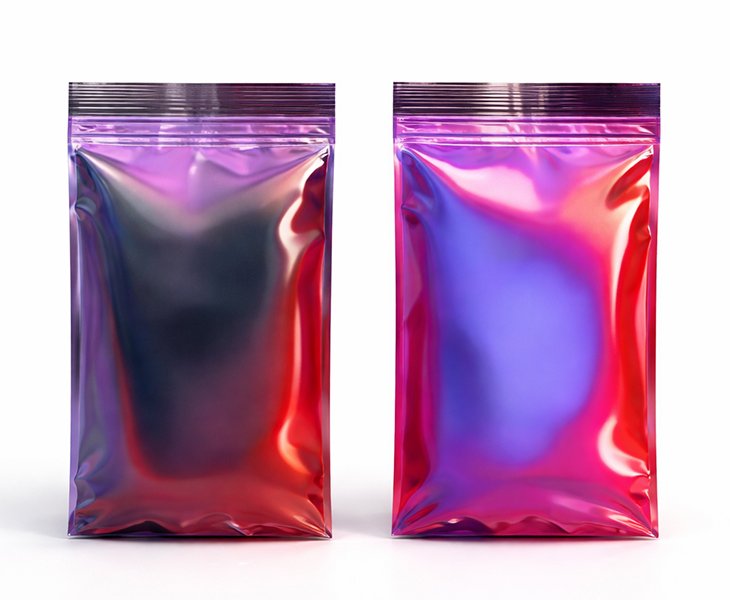
Common Surface Finish Options
Gloss is the standard. Most flexible packaging ships with it for good reason — it’s compatible with virtually all laminate structures and printing methods, it reflects light and gives colours a saturated appearance on shelf, and it holds up reliably through transport and repeat production runs.
For most food products — snacks, dry goods, frozen product, sauces — gloss is usually enough. It doesn’t complicate the production process, it doesn’t add meaningful cost, and it reproduces consistently across batches. There’s no production reason to move away from it unless the product category or positioning specifically calls for something different.
Matte absorbs light rather than reflecting it, giving the surface a flat, non-reflective appearance. Colours tend to look slightly more subdued — which in some categories reads as quality, and in others just looks dull.
It works well for coffee, premium pet food, health and wellness products, and anything positioned in a more considered market segment. It’s also practical for products photographed regularly for online listings, since it reduces glare in images.
The things worth knowing before specifying matte: it shows fingerprints and scuff marks more visibly than gloss, particularly on dark-coloured bags. And it adds cost. In most cases that cost is justified when the product category genuinely benefits from the look. For standard commodity products, it usually isn’t.
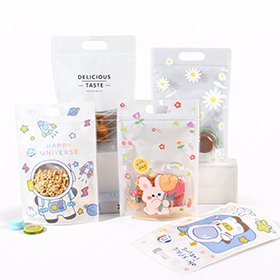
Soft-touch is a specialised matte laminate with a velvety, low-friction feel. The texture is noticeable when the bag is handled, which is the point.
We’d be straightforward about this one: it’s appropriate for a specific type of product — premium confectionery, speciality coffee, certain personal care formats — where the tactile experience is genuinely part of the positioning. In standard food packaging, bulk formats, or anything price-sensitive, it adds cost without changing any commercial outcome.
It also scuffs more visibly during distribution than standard matte or gloss. On a bag going through extended transit or rough retail handling, that’s worth factoring in before committing.
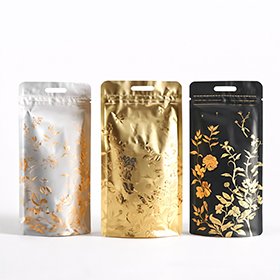
Metallic appearance can come from the laminate structure itself — metallised film (VMPET) gives the bag a reflective, silver-toned base — or from applied foil stamping over specific printed areas.
In practice, metallised film handles most visual requirements without extra process steps or cost. Foil stamping is a separate finishing addition used when specific gold, silver, or coloured metallic elements are needed — typically for logos or feature areas, not full-surface coverage. It adds lead time and cost, and works best when the brief is specific rather than general.
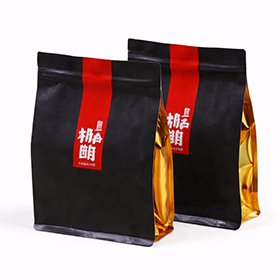
Spot finishing applies gloss or matte treatment to selected areas only, creating contrast between finished and unfinished surfaces. Used selectively — to highlight a logo, draw attention to a certification mark — it can be effective.
It requires an additional production pass, and registration between the spot finish and the printed artwork needs to be precise. Misalignment is more visible here than with full-surface treatments. This is where issues sometimes show up on first production runs when the tolerances haven’t been confirmed upfront.
For most applications, the production complexity doesn’t justify the effect unless there’s a specific reason for it.
Gloss is the default. If you don’t specify otherwise, the bag comes with standard gloss. Most products don’t need anything beyond that.
For premium coffee, speciality food, or high-end pet products — often yes. For standard commodity products, it usually doesn’t change any commercial outcome. It depends on what the product positioning actually calls for.
It can. Soft-touch surfaces scuff and mark more visibly than standard matte or gloss, particularly in rough handling or long transit. Worth considering before specifying it for products with demanding distribution conditions.
Yes — that’s spot finishing. It requires an additional production step and precise registration. We’d advise it when it serves a specific design purpose. As a general decorative addition, the complexity usually isn’t justified.
Matte over a metallised base mutes the reflectivity. Gloss enhances it. The combination affects how the metallic base reads, so it’s worth confirming with a sample if this matters to the design.
Standard gloss and matte are consistent in normal production conditions. Specialised finishes — particularly soft-touch — can have more run-to-run variation. If consistency across batches is important, raise it when the specification is confirmed.
No. The finish is on the exterior of the bag and doesn’t contact the product. The inner sealant layer handles that.
Yes. If you’re comparing gloss and matte, we can provide physical samples. Finish decisions are much easier to confirm in hand than from a screen description.
Related Products
 Liquid Pouches
 Gift Bags
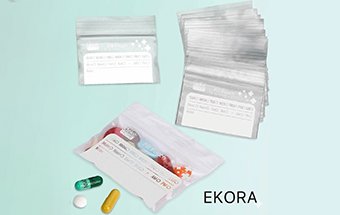 Medical Packaging Bags
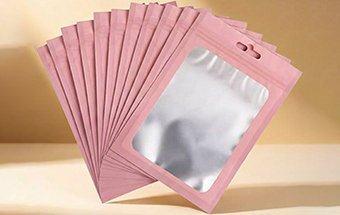 Cosmetic Packaging Bags
 Detergent Pouch
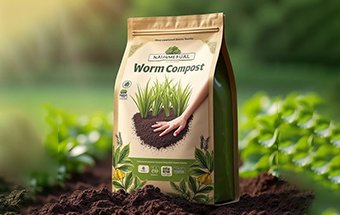 Agricultural Bags
 Electronic Packaging Bag
 Eco-Friendly Packaging Bags
 Packaging Film